
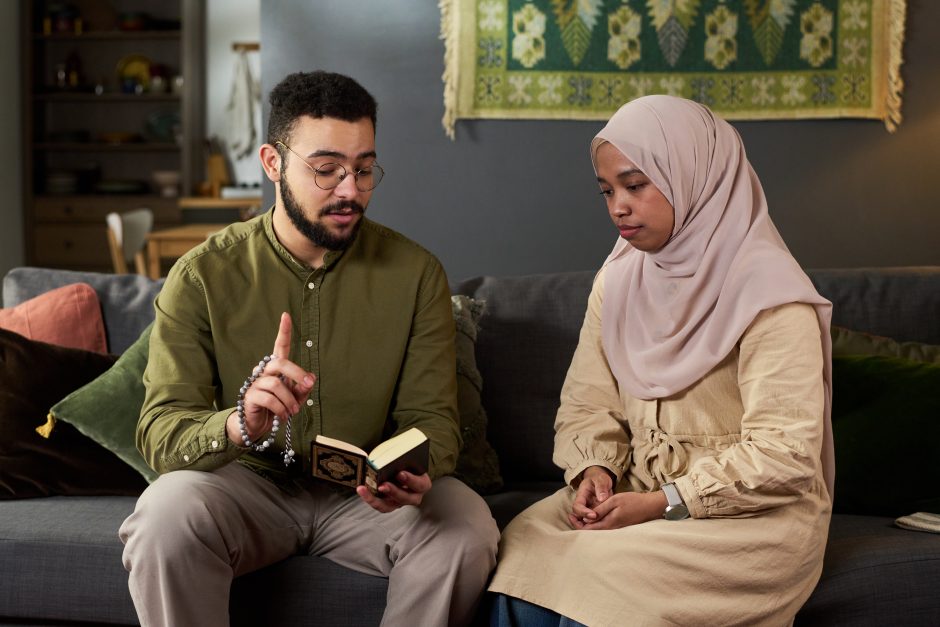
What manpasand rishta actually means
A manpasand rishta is a match that the couple identified themselves rather than through the family's arranged search. The word literally means "of my liking". It is a wide term that covers a spectrum, from long-standing university friendships that turned into marriage proposals, to platform-introduced matches where the couple then brought the families in.
What it is not: elopement (fleeing to marry without informing anyone), secret relationships (ongoing romance hidden from family), and court marriage (a specific legal act performed at a court). All three are sometimes conflated with manpasand rishta, and the conflation causes most of the family resistance you will face.
Separating the four
| Category | Definition | Family involvement |
|---|---|---|
| Manpasand rishta | Couple found each other; want family-approved nikah | Full, invited |
| Elopement | Couple marries without informing anyone; usually against family | None |
| Secret relationship | Ongoing romance hidden from families | None; usually not oriented toward nikah |
| Court marriage | Legal nikah performed at court (often when family opposition blocks other channels) | Optional; often absent |
The Islamic position
Consent of the candidates is the non-negotiable Islamic requirement for a valid nikah. This is not disputed across any school of thought. The wali (male guardian) requirement is disputed: some schools consider the wali essential for a first-marriage woman, others do not; scholars differ on whether the wali requirement is a right or a validating condition. The Council of Islamic Ideology resources cover the mainstream Pakistani jurisprudential position.
Practical rule: for a woman seeking to marry manpasand, involving her wali (father or nearest male guardian) removes any jurisprudential ambiguity and preserves family relationships. Court marriage without wali involvement is legally valid in Pakistan under the MFLO 1961 but leaves an unresolved fiqh question that will haunt the marriage. Prefer wali involvement even when law does not strictly require it.
Why manpasand rishtas fail socially
Three usual reasons:
- No family channel opened first. The couple announces the decision when both families were expecting the arranged process. Family feels ambushed.
- No elder advocate. The proposal lands directly on the parents without anyone respected in the family circle preparing the ground.
- Ultimatum framing. "Approve or we will marry anyway." This almost always hardens opposition and closes doors that were previously open.
Couples who avoid these three fail socially far less. The match itself is rarely the problem; the presentation to families is.
The three-step path this cluster recommends
Step 1: Build the case
Before saying a word to your parents, be ready to answer the questions they will ask. Who is this person's family? Where are they from? What do their parents do? What is the biradari? What is the education, employment, financial standing? Deeni practice? Prior marriages? All of this in advance. A manpasand proposal that answers ten family questions in the first five minutes lands far differently than one that answers "we will find out".
Step 2: Choose the messenger
The first person to raise this with your parents should almost never be you. Pick an uncle, an older cousin, an imam, a family friend who both sides respect. That person makes the initial soft opening: "beta has been thinking about someone, and we thought we should bring it up gently to see what you think." This creates space; the direct conversation with parents can then come from a warmer place.
Step 3: Propose formally
Once the ground is prepared, the proposal follows the normal arranged process: biodata and family-of-origin summary shared, chai meeting arranged, both families evaluate. The only difference from an arranged rishta is that the initial discovery happened outside the family channel; everything from meeting one onward is identical.
The families need the ritual: the visit, the tea, the biodata exchange, the meeting of extended relatives. These are not obstacles to be avoided; they are what turns a manpasand match into a family-blessed marriage. Skip them and the marriage starts on a fault line.
Online-introduced manpasand rishtas
A match found through a platform like QuickRishta occupies an interesting middle ground: the couple identified each other, but through a structured system with photos, biodatas, and family co-account access. Presenting this to parents is easier than pure candidate-discovery because there is a "how we met" story that reads as arranged-adjacent: "I saw a profile on a matrimonial site, we exchanged interests, would you like to see their biodata?" Many parents welcome this framing.
See the family role guide for how to structure the family conversation, and free rishta search for how the platform channel fits alongside family-network channels.
When the family refuses
Sometimes the family will not come around even after good-faith sequencing. Options in ascending order of family cost:
- Time. Six to twelve months of patient waiting often shifts positions.
- Extended-family mediation. Bring in uncles, aunts, respected community members.
- Religious counsel. A qualified imam or scholar the family respects can address specific concerns.
- Legal fallback. Court marriage is available under Pakistani law where family blocks a nikah. This should be a genuine last resort, chosen with legal advice and safety planning. See our inter-caste marriage guide for how the legal fallback works and when it is appropriate.
If safety is a concern (coercion, threats), the Ministry of Human Rights helpline and provincial women's protection resources are the correct first contact.
Frequently asked questions
What is a manpasand rishta?
A match the candidates found themselves; they want a normal family-blessed nikah, not elopement.
Is it allowed in Islam?
Consent is required and undisputed. Wali requirement varies by school; consult a qualified mufti for your context.
Why do so many manpasand rishtas fail socially?
No family channel first, no elder advocate, ultimatum framing. All three avoidable with sequencing.
Start online, involve family early
Platform-introduced matches present to parents easier than pure candidate discovery. Family co-account access built in.